

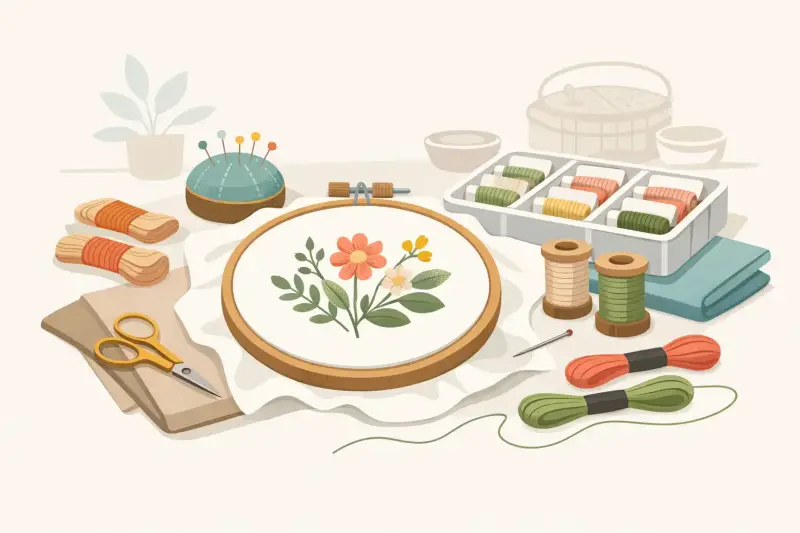
A good beginner embroidery kit UK stitchers can settle into is not simply a bundle of supplies. It is a small invitation to put the phone aside, make a cup of tea and create something slowly with your hands. When life feels noisy or hurried, the gentle repetition of thread passing through fabric can offer a quieter place to land.
If you are new to embroidery, it is easy to feel that you need perfect stitches, a vast colour collection or hours of free time before you can begin. You don't. The right first kit gives you enough guidance to feel supported, while leaving room for you to find your own rhythm. A slightly uneven stitch is still yours. It belongs to the story of learning.
## What makes a beginner embroidery kit feel genuinely welcoming?
The best kits remove the small decisions that can make a new craft feel daunting. Rather than wondering which needle fits which thread, whether your fabric is suitable or how to transfer a design, you can sit down with the essentials already chosen for you.
Look for a kit with a pre-printed or clearly transferred design, a hoop, fabric, embroidery threads a needle and instructions written in plain, reassuring language. A simple design matters too. A first project should have enough detail to feel satisfying, but not so much that it becomes something you put away half-finished.
Guidance is particularly valuable when it explains not only what to do, but what to expect. Thread tangles sometimes. Knots happen. Your hoop may need tightening partway through. These are ordinary parts of stitching, not signs that you are doing it wrong.
At Thread Needle Soul, each design begins with this feeling in mind: that a person should be able to open a parcel, take a breath and begin without needing to prove anything first.
## Choosing your first design
Your first embroidery project does not need to be chosen according to what is easiest on paper. It is more likely to be completed if the image speaks to you. Perhaps you are drawn to wildflowers, a moonlit motif, a tiny houseplant or words that carry comfort. A design with personal meaning can turn ten quiet minutes of stitching into a ritual you want to return to.
That said, there are practical details worth considering. Line-based designs, small floral motifs and patterns using a limited palette are often kind places to start. They allow you to practise a few stitches without constantly changing thread or trying to fill large areas of fabric.
A larger, more detailed piece can be lovely if you enjoy a long-term project, but it may not be the best choice when you are hoping for an early sense of completion. There is no prize for picking the most challenging kit. Choose the one you will be pleased to see waiting for you on the sofa.
### Start with a small stitch vocabulary
You only need a handful of stitches to make beautiful embroidery. Running stitch creates delicate lines. Back stitch gives a stronger outline. Satin stitch adds small areas of smooth colour, while French knots make charming centres for flowers or scattered stars.
Many beginner kits focus on these foundations. Repeating the same stitch is not boring - it is often where the calming quality of embroidery begins. Your hands learn the movement gradually, and the mind has permission to soften its grip on the rest of the day.
If a stitch feels awkward, slow down rather than pulling harder. Loosen your shoulders, let the thread hang free now and then, and make a smaller length of thread work for you. Shorter lengths are less likely to tangle, even if they mean re-threading the needle a little more often.
## The materials that make a difference
Not all kit contents feel the same to use. For a first experience to be enjoyable, fabric should be stable enough to hold tension in the hoop without slipping constantly, and threads should separate easily without fraying into a fuss. Clear colour labels or a thread guide can save surprising amounts of uncertainty.
A wooden embroidery hoop is both a useful tool and a gentle frame for your work. It keeps the fabric taut while you stitch, helping your needle pass through more cleanly. When your piece is finished, it can often become part of the display, turning your new embroidery into something to hang in a hallway, bedroom or cosy corner.
Needles deserve a little attention too. An embroidery needle has an eye large enough for stranded cotton and a point that passes through fabric with ease. If you find yourself forcing the needle, pause. The fabric may be held too tightly, the needle could be too small for the thread, or you may simply need a gentler touch.
The contents of a kit do not have to be extravagant. Thoughtful, well-matched materials are more helpful than an overwhelming selection of extras. You can build a collection of favourite threads, fabrics and [needle minders](https://www.threadneedlesoul.co.uk/browse-products/threads-needle-minders) later, when you know what you love to stitch.
## Make space for the process, not perfection
Embroidery can be a creative practice, but it can also be a way of noticing how you are feeling. Some people stitch while listening to a podcast; others prefer the quiet. Some complete a design in a weekend, while others leave it beside the bed and add a few stitches before sleep. All ways are enough.
Try setting up a small, welcoming place for your project. It might be a basket by your favourite chair, with small scissors and a small cushion to rest the hoop on. Keeping your kit visible makes it easier to choose a few restorative minutes over another spell of mindless doom scrolling.
There will be days when your stitches are neat and steady, and days when concentration is harder to find. You are allowed to unpick a section, but you are also allowed to leave it as it is. Handmade work carries evidence of the hands and heart that made it. That is part of its beauty.
### A few gentle habits for beginners
Before you start, wash your hands and make sure your fabric is secure in the hoop. Thread your needle with a manageable length, around the length of your forearm, rather than a long strand that will twist and knot.
As you stitch, avoid pulling the thread so tightly that the fabric puckers. Aim for a smooth, relaxed line. Turn your hoop over occasionally to check that the back is not becoming overly tangled, but do not expect it to look identical to the front. The back of embroidery is allowed to be practical rather than pretty.
When you need to pause, park the needle safely in the fabric or use a needle minder. It is a small kindness to your future self, especially when returning to a project after a busy week.
## Is a kit better than buying supplies separately?
For a complete beginner, a kit is often the gentlest route in. It saves money on buying large quantities of materials you may not use and removes the uncertainty of choosing compatible supplies. It can also make a thoughtful gift for someone who is going through a difficult season, beginning a new chapter or simply deserves an evening that belongs to them.
Buying supplies separately becomes more appealing once you have discovered your preferences. You may fall in love with botanical designs, rich autumnal colours or the pleasing precision of counted cross-stitch. At that point, choosing your own fabric and thread becomes part of the creative pleasure.
It depends on what you need right now. If you want a carefully held first step, [choose a kit](https://www.threadneedlesoul.co.uk/browse-products/embroidery-kits). If you already know the stitch, the colour palette and the project in your mind, individual supplies may offer more freedom.
## Give yourself permission to begin
A beginner embroidery kit is not a test of patience or artistic talent. It is a beginning you can make in your own time, one thread at a time. Let the first knot be imperfect, let the colours brighten your table, and trust that every quiet stitch is creating more than a finished piece.
Add comment
Comments